









Diagnosis before more activity
We first establish what is preventing growth and whether the available evidence supports that conclusion.
You should know why a change is being recommended before resources are committed to implementing it.

See how BiViSee thinks, works, and takes responsibility before you decide whether we should touch your growth system.
BiViSee helps B2B and B2C companies, agencies, and organizations in regulated markets find and fix the constraint preventing visibility and demand from becoming qualified inquiries, pipeline, customers, and measurable revenue.
We work across AI search, SEO, paid media, positioning, content, websites, conversion, CRM, automation, and measurement.
But we do not start with a channel.
We start with the business problem.
Growth problems rarely belong to one marketing channel. We look at the full path from discovery to demand, conversion, CRM, Sales, and measurable business outcomes.
We do not begin by prescribing SEO, paid media, HubSpot, a new website, or another service.
We first establish what needs to change commercially and what is preventing it.
Search, advertising, positioning, content, websites, conversion, CRM, Sales, and measurement affect each other.
We examine the handoffs between them instead of optimizing each area in isolation.
Traffic, rankings, clicks, and leads can matter, but they are rarely the final business result.
Where the data allows it, we connect marketing activity with qualified inquiries, opportunities, customers, revenue, or another agreed commercial outcome.
BiViSee works with organizations where growth depends on more than increasing traffic or launching another campaign.
We support companies and brands with complex buyer journeys, several acquisition channels, or unclear links between marketing activity and commercial results.
The work is especially relevant when leadership can see activity but cannot clearly determine what creates qualified demand, pipeline, or revenue.
We support agencies that need specialist expertise, additional delivery capacity, or capabilities that do not make sense to build permanently in-house.
We work with regulated-market organizations where trust, claims, privacy, platform policies, consent, reputation, or professional standards affect how growth can be generated.
In these environments, growth cannot be separated from risk and credibility.

Credentials should be specific, attributable, and verifiable.
We do not treat a collection of platform logos as evidence of expertise.
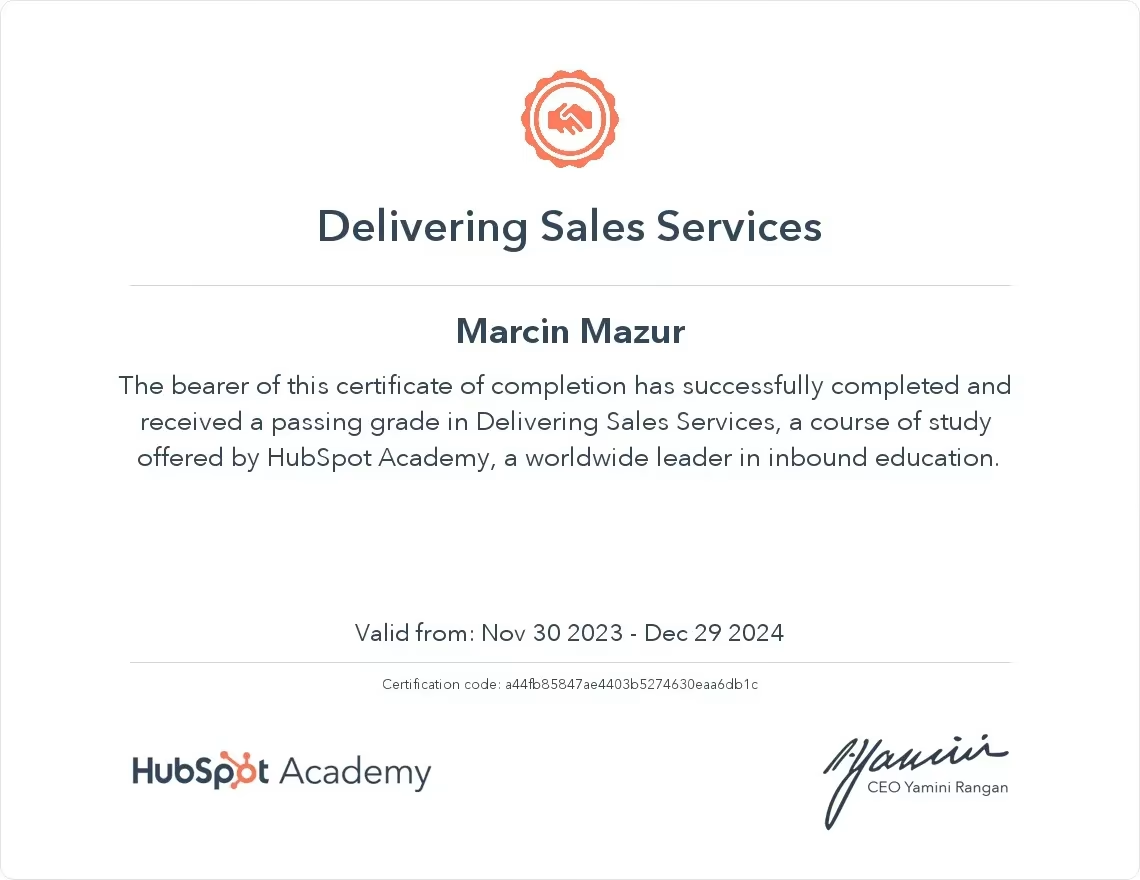
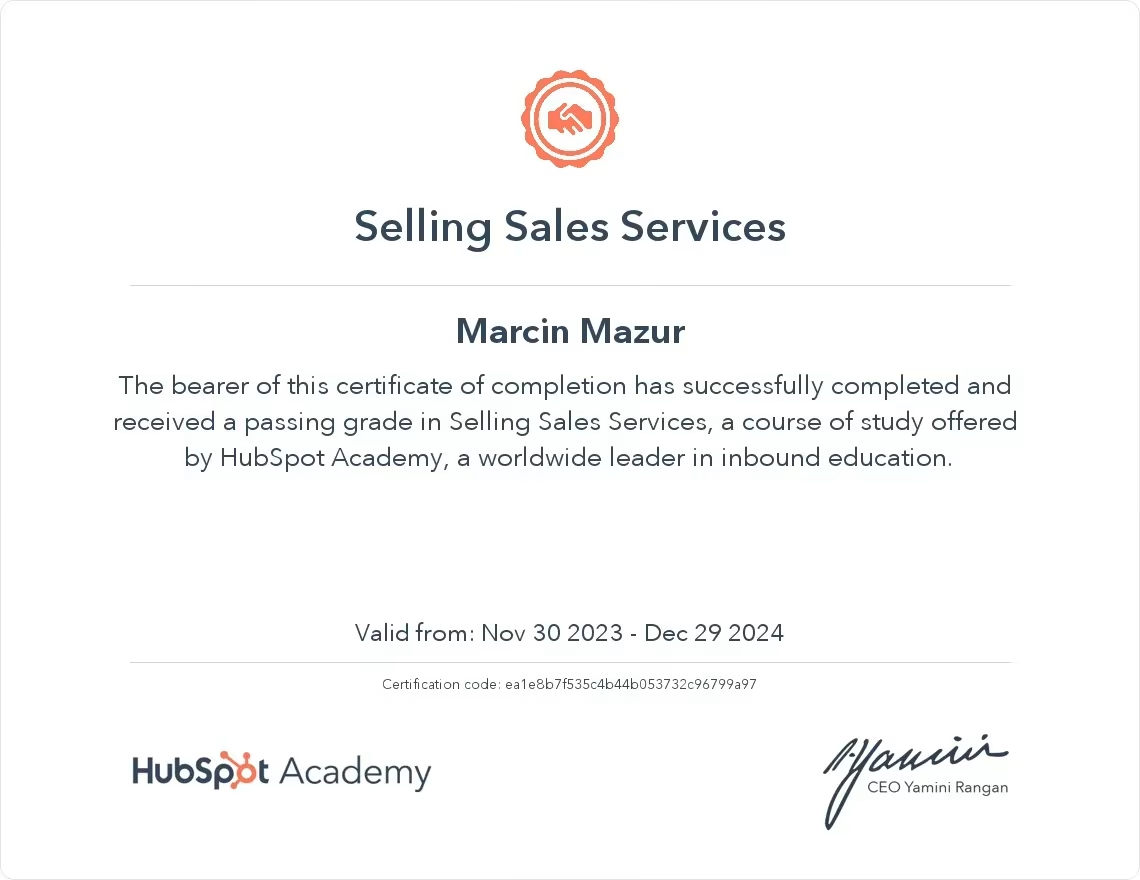
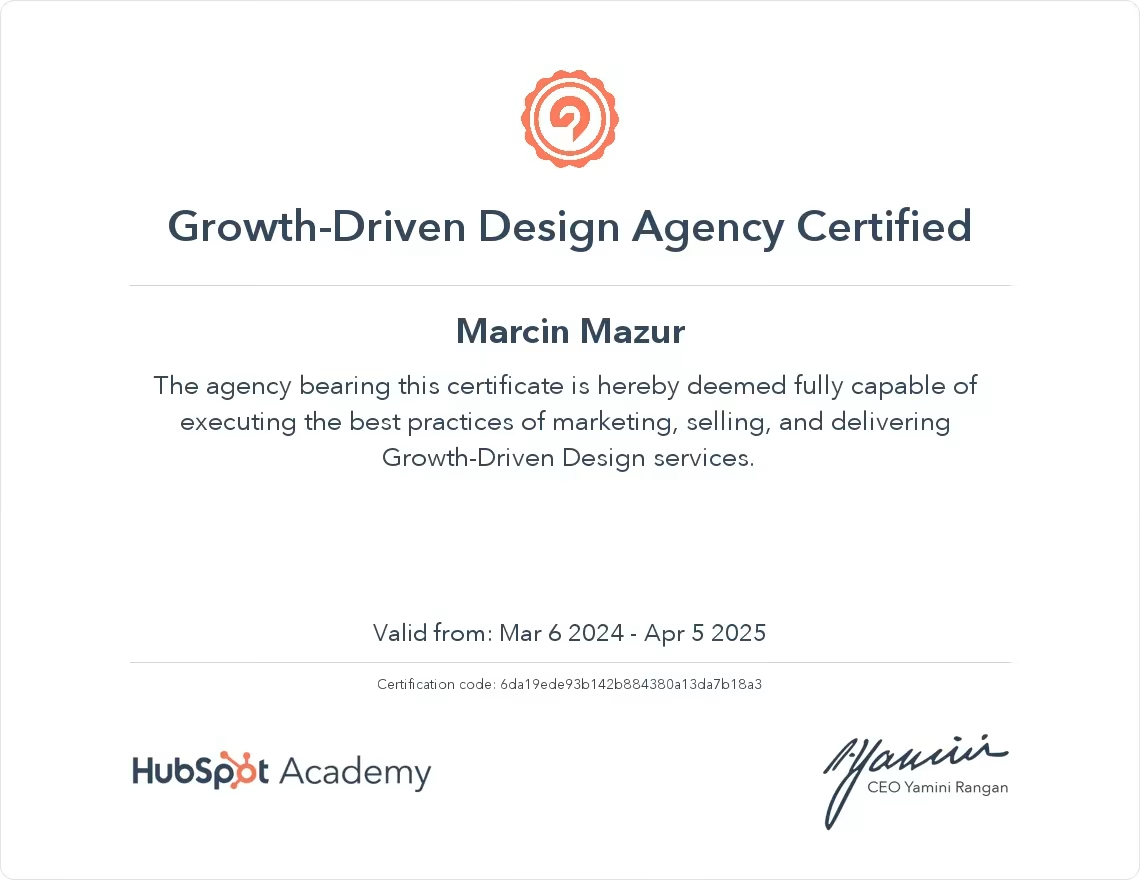
BiViSee is a HubSpot Solutions Partner.
We work with HubSpot across CRM, lifecycle management, marketing automation, reporting, integrations, and marketing-to-Sales handoff when the platform fits the client’s requirements.
Partner status does not determine which technology we recommend.
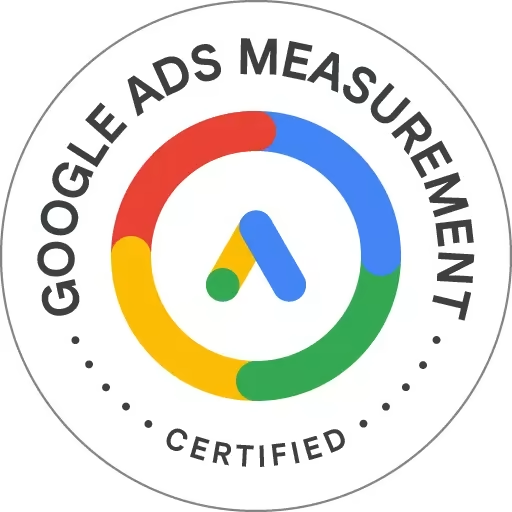
Our Google Ads certifications in Search, Video, Display, and Measurement prove our ability to plan, execute, and optimize high-performing ad campaigns.
Trusted by industry leaders like CallTrackingMetrics, HubSpot, Shopify, and Google, our partnerships reflect our commitment to performance and transparency.

A visible marketing problem is not always the real constraint.
Rising acquisition cost may actually come from poor traffic quality, weak conversion, or incorrect measurement.
Low lead quality may begin with positioning rather than targeting.
A CRM problem may be caused by missing context at the conversion stage.
An attribution problem can make a productive channel appear ineffective.
Weak AI visibility may come from fragmented entity signals, insufficient evidence, or gaps in content architecture.
BiViSee works backwards from the business result to identify where value is being lost.
Only then do we decide which capabilities are required.
Our Growth System connects six areas:
We establish what needs to improve.
That may be qualified pipeline, acquisition efficiency, sales acceptance, conversion, AI visibility, attribution quality, revenue, or another measurable business result.
We review the data required to understand the problem.
Depending on the engagement, that may include:
We also document where the available data is incomplete, inconsistent, or unreliable.
We map the relevant parts of the growth system and identify where demand, trust, information, or commercial value is being lost.
The goal is to distinguish the root problem from its visible symptoms.
We determine which changes should happen first based on expected business impact, evidence, dependencies, effort, and risk.
The specialists required for the engagement execute the agreed work.
We do not force every client into the same package of services.
We compare the result with the agreed baseline.
Where possible, we measure beyond channel-level metrics and evaluate what changed commercially.
Good work requires more than assembling specialists.
Someone must be responsible for the diagnosis, the claims being made, the technical decisions, and whether the work still connects to the original business objective.

Case studies provide a better basis for evaluating BiViSee than generic statements about quality or performance.
AI visibility increased from 18% to 43% across a controlled set of commercially relevant prompts. Citation coverage increased from 22% to 61%.
Marketing-to-opportunity conversion increased from 4.7% to 10.8% within five months.
Cost per workable admission inquiry decreased by 31%, from $412 to $284.
Sales-accepted opportunities increased by 39%, from 41 to 57 per month.
The share of opportunities with valid acquisition context increased from 54% to 91%.
We first establish what is preventing growth and whether the available evidence supports that conclusion.
You should know why a change is being recommended before resources are committed to implementing it.
When several capabilities are required, they work against the same business problem.
Website work should not undermine SEO.
Paid media should not optimize for conversions Sales rejects.
CRM changes should preserve acquisition context.
Reporting should answer the commercial question the project was designed to improve.
We define the baseline, comparison method, and relevant exclusions before interpreting the result.
The goal is not to make every metric look better.
The goal is to determine whether the growth system became more effective
Those capabilities are delivered by specialists across strategy, search, paid media, social, technology, and growth operations – meet the BiViSee growth team behind the work.
Where do you need help ?
Improve organic visibility in search engines. They manage technical optimization, keyword research, content structure, and backlink strategy to increase qualified traffic.
Manage paid campaigns across search engines and advertising platforms. They control bidding strategy, audience targeting, and conversion tracking to generate qualified leads at controlled acquisition costs.
Plan and run campaigns across social platforms. They manage content calendars, paid promotion, and audience engagement to support brand visibility and demand generation.
Create content that attracts and educates potential buyers. They produce articles, landing page copy, case studies, and campaign assets that support both organic reach and conversion.
Build and manage automation systems. They design workflows, lead scoring models, lifecycle management, and campaign reporting inside marketing platforms.
Build websites, landing pages, and web applications. They work with modern frameworks and content management systems to deliver fast, scalable, and maintainable digital platforms.
Design clear navigation, page layouts, and interface elements. Their work improves usability and helps visitors move smoothly from discovery to conversion.
Develop custom applications, integrations, and backend systems. They connect marketing platforms, sales tools, and internal systems through application programming interfaces and cloud infrastructure.
Test websites and applications before release. They verify functionality, performance, and stability across devices and browsers.
Everything is in your hands
You do not need another channel recommendation before you know what the actual constraint is.
Start with the business outcome, the available evidence, and the point where growth stops translating into commercial value.