

Case Study | Conversion and Intent Routing
How a Mid-Market Company Reduced Conversion Leakage and Improved Intent Routing
BiViSee helped an anonymized mid-market company find where qualified demand was dropping out, rebuild key conversion paths, and route buyers according to fit, urgency, and intent.
- 63% increase in qualified conversion rate
- 91% of inquiries routed to the correct path, up from 62%
- 33% increase in sales-accepted inquiries
Executive Summary
The company generated traffic and inquiries, but too much demand disappeared between first interest and a useful commercial next step.
Some visitors reached pages that did not match their intent.
Forms asked for too much information too early.
High-intent requests and early-stage research entered the same workflow.
Sales received records without enough context to distinguish urgent, qualified demand from general interest.
BiViSee treated the issue as conversion leakage across the website, forms, routing logic, and CRM – not as a request to increase a single page’s conversion rate.
The engagement mapped priority journeys, removed avoidable friction, introduced intent-sensitive paths, and connected each conversion to an appropriate next step.
Client Context
The client was an anonymized mid-market company with several services, buyer types, and levels of purchase readiness.
Traffic arrived from paid media, organic discovery, referrals, and direct brand demand.
Visitors could be researching a problem, comparing approaches, validating the company, or ready to speak with Sales.
The existing experience did not consistently recognize those differences.
Leadership wanted to know:
Where does qualified demand leak out, and how should each level of intent be routed?
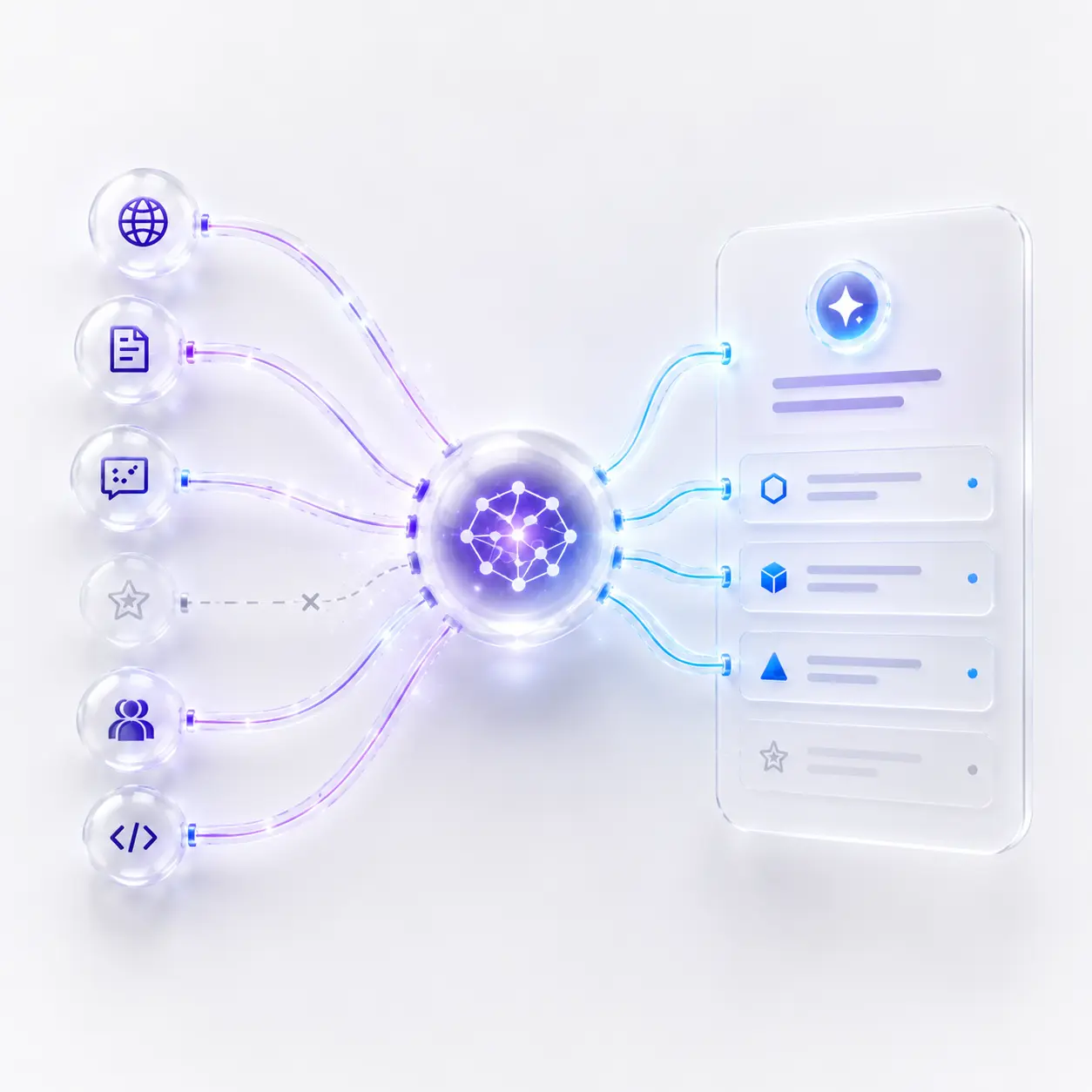
The starting constraint was one conversion path trying to serve every buyer
Starting Constraint
Baseline Metrics
Diagnosis
BiViSee found that the largest leaks were caused by mismatched intent and next steps:
Message mismatch
The source promise and landing-page argument did not always align.
CTA mismatch
Visitors were offered one large commitment regardless of readiness.
Form friction
Required fields increased effort without improving qualification.
Weak intent signals
Page, offer, urgency, and self-reported need were not combined.
Routing gaps
Every submission entered a similar follow-up path.
Measurement gaps
Page conversion was reviewed separately from Sales acceptance and opportunity quality.
Actions Taken
1. Mapped priority conversion journeys
BiViSee connected source, landing page, content path, CTA, form, thank-you experience, CRM routing, and Sales outcome for the highest-value journeys.
2. Matched pages to intent
Priority pages were rewritten and reorganized around the problem, audience, proof, objections, and next step implied by each traffic source.
3. Introduced progressive conversion paths
High-intent visitors could request a diagnostic or conversation. Mid-intent visitors could choose a relevant evaluation resource, proof asset, or guided next step without being forced into a premature Sales form.
4. Reduced form friction
Unused fields were removed, questions were sequenced more clearly, and essential qualification data was captured without making every visitor complete the same form.
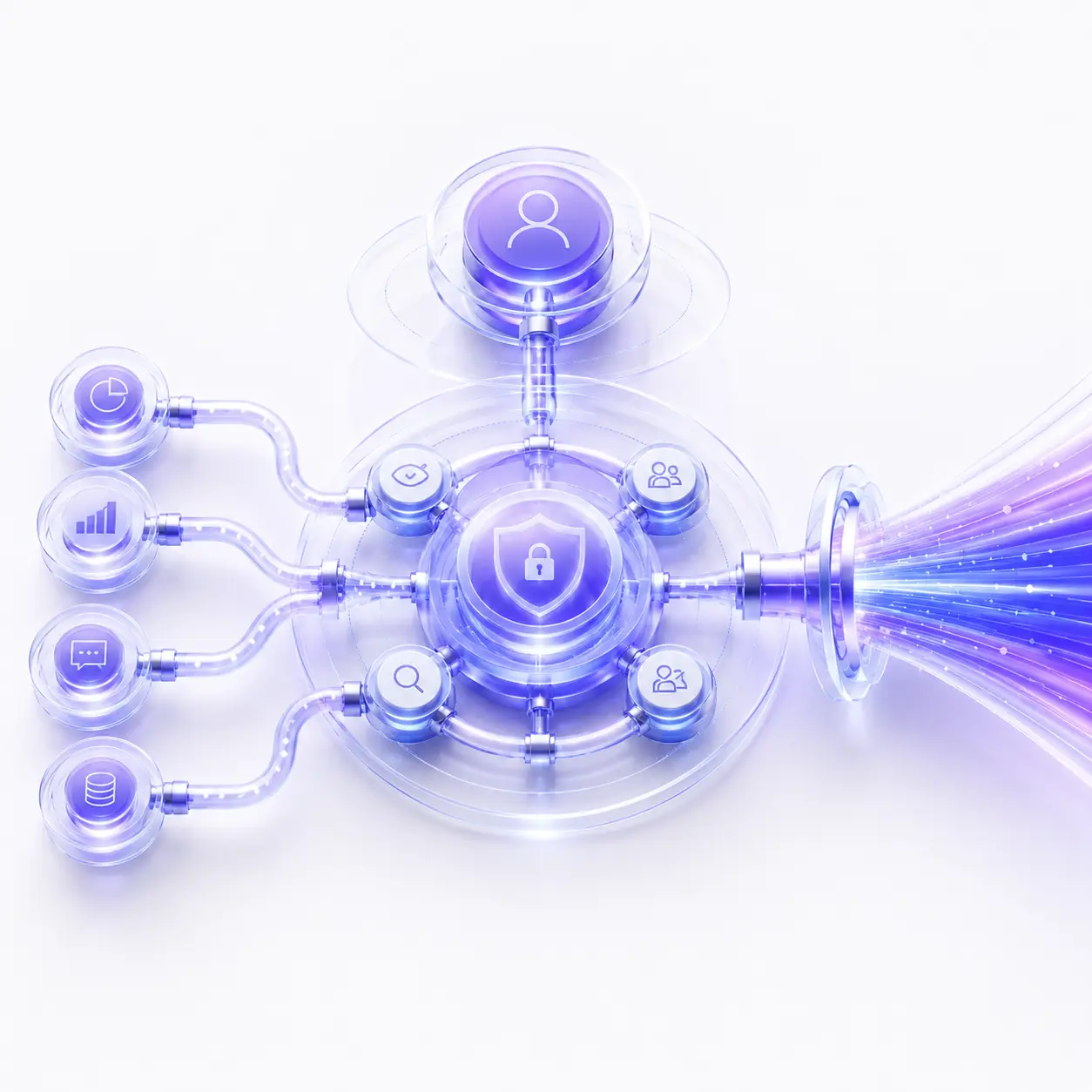
5. Built intent-aware routing
Fit, urgency, source, page, offer, and stated need informed the route, owner, follow-up expectation, and CRM context.
6. Connected CRO with pipeline quality
Tests were evaluated against qualified conversions, Sales acceptance, and opportunity movement – not form completion alone.
Timeline
| Phase | Timing | Work completed |
|---|---|---|
| Diagnostic | Weeks 1 – 2 | Mapped priority journeys and established page-to-CRM cohorts |
| Path redesign | Weeks 3 – 6 | Aligned messages, CTAs, forms, thank-you steps, and intent options |
| Routing implementation | Weeks 7 – 9 | Added qualification logic, context capture, ownership, and follow-up rules |
| Optimization | Weeks 10 – 14 | Tested friction, path selection, qualified conversion, and Sales outcomes |
Results
During the matched 12-week post-implementation period, form completion increased from 38% to 54%, a 42% relative improvement.
The qualified conversion rate increased from 1.9% to 3.1%, a 63% improvement, without increasing paid-media spend.
Correct intent routing increased from 62% to 91%, while median assignment time fell from 9.4 hours to 1.7 hours.
Sales acceptance increased from 46% to 61%, a 33% relative improvement.
High-intent demand reached Sales with clearer context, while mid-intent visitors received a useful continuation path.
Result: Qualified conversion increased by 63%, correct intent routing rose from 62% to 91%, and sales acceptance increased by 33% during the matched 12-week comparison.
Measurement Method
Recommended definition:
Conversion leakage is the loss of eligible demand between a meaningful entry point and the next commercially appropriate step.
Intent-routing effectiveness is the share of conversions assigned to the correct path, owner, and follow-up based on documented fit and intent rules.
Recommended comparison:
- Baseline: 18,740 eligible sessions across eight journeys during the 12 weeks before implementation.
- Post-implementation: the same journeys during a matched 12-week period after stabilization, segmented by source, device, and page.
What Changed Operationally

Related Business Context
Primary business problem: Reducing conversion leakage between buyer intent and the right commercial next step
Growth System layer: Improving website and conversion paths so qualified demand moves forward instead of dropping out
Capabilities used: Removing friction and aligning conversion paths with buyer readiness | Rebuilding landing pages, forms, and next steps around visitor intent
Relevant audience: Mid-market companies and brands with multiple buyer types, services, or levels of purchase intent
Need to turn more qualified intent into the right next step?
BiViSee can help identify where your pages, forms, qualification logic, or CRM routing causes demand to leak.