
What You’ll Learn
Social media in regulated industries is the use of social channels under legal, compliance, audit, and reputational constraints that make every post a permanent trust signal and potential liability.
Unlike unregulated social media, it prioritizes defensible claims, approval workflows, recordkeeping, restraint, and risk management over speed, virality, or posting volume.
In regulated sectors such as finance, healthcare, legal, and insurance, effective social media must survive compliance review, avoid overclaiming, and build credibility through clear boundaries and evidence.
The goal is not to publish more, but to create fewer, stronger messages that protect trust, reduce exposure, and remain auditable over time.
Key Takeaways
- Social media in regulated industries prioritizes auditability and trust over volume and virality, requiring every message to survive compliance scrutiny.
- Excessive posting elevates legal and reputational risk; the most credible brands win with fewer, higher-stakes communications optimized for restraint.
- Governance and built-in approval workflows are essential to prevent process failures, audit risk, and momentum loss during campaign execution.
- Effective regulated social media strategy is boundary- and system-driven, with trust built on visible risk management, not increased activity.
Most teams think social media is about maximizing reach and driving constant conversation.
But the rules shift fast when every post is subject to legal review and recordkeeping.
The greater the scrutiny, the less you can rely on volume, speed, or improvisation to earn attention.

Why social media becomes a risk‑aware trust system under regulation
A single error – one compliance miss, one claim that slips through – can escalate from a minor correction to an investigation, a fine, or a lasting hit to corporate credibility.
That risk is not theoretical.
In regulated markets, even a deleted tweet can live on in an audit file.
Every promise must be defensible, every statement coded for permanence rather than performance.
Here’s the trap: Most social processes are built for hype, not habit.
Unregulated brands chase trends, knowing a bad post may blow over in a day.
But for a financial, healthcare, or legal company, every message is a permanent asset and a permanent liability.
The difference is not volume, but survivability.
So what changes?
Social content turns into documentation, not just broadcast.
Review layers multiply.
Creative spontaneity narrows.
Instead of asking, “Will this go viral?” teams learn to ask, “Could this survive a regulator’s screenshot next year?”
What changes when social content must withstand compliance scrutiny
That tension forces a new playbook.
Smart teams design every post for audit-readiness and traceability; every asset needs proof behind the claim.
The content itself becomes part of the evidence trail – not just for customers, but for the compliance officer waiting on the other end.
Therefore, in regulated industries, the real metric is not engagement alone but how much trust the system visibly accrues over time, with as little leakage as possible.
Social channels become less about amplification and more about building an unimpeachable record.
Regulators aren’t the only audience – buyers notice the restraint, too.
The trust signal grows stronger when risk is managed out loud.
Key Operational Changes in Regulated Social Media
| Aspect | Unregulated Social Media | Regulated Social Media | Impact |
| Content Nature | Broadcast for hype and reach | Documentation subject to compliance | Content must be defensible and permanent |
| Review Process | Minimal or none | Multiple review layers required | Slower posting, higher accuracy |
| Creative Style | Spontaneous and improvisational | Restrained and audited | Limits on spontaneity and risk |
| Performance Metric | Engagement and reach | Trust and compliance preservation | Focus on long-term credibility |
| Risk Exposure | Low, errors usually temporary | High, errors trigger audits and fines | High costs for missteps |
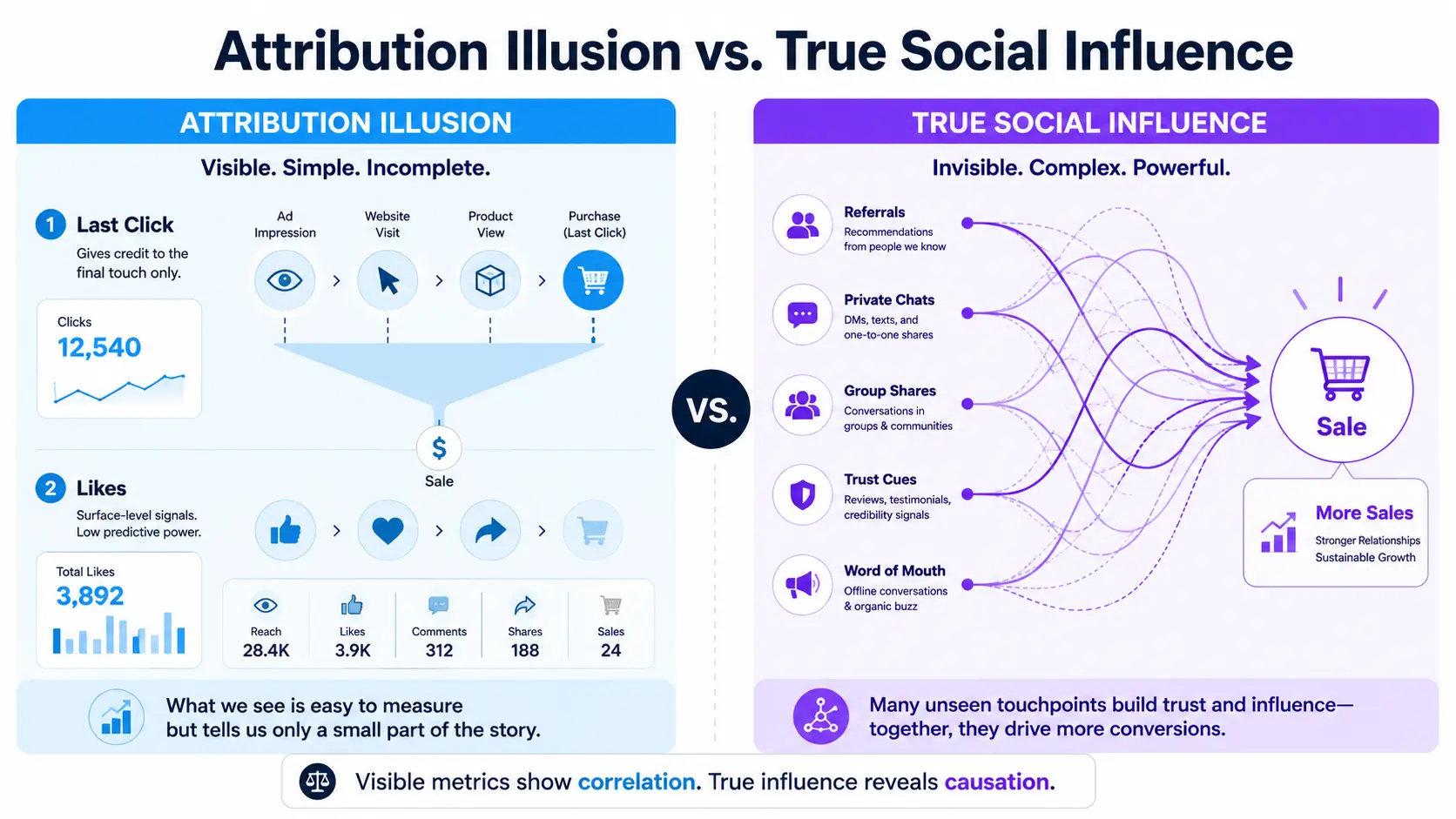
When visibility requires restraint, not volume
Social media in unregulated industries rewards those who shout the loudest or pivot fastest.
But each extra post in a regulated environment is another legal surface.
The instinct to “just increase frequency” turns strategic advantage into liability.
One myth persists: that more content inevitably increases brand trust.In our experience across finance and health, the opposite is often true.
Every unnecessary post dilutes the brand’s careful reserve and multiplies exposure to misstep.
Reputation damage is seldom loud – it builds quietly, just below the compliance radar, until a pattern of over-disclosure sparks attention.
It’s like overwatering a plant to make it grow faster: roots rot long before the leaves wilt.
The strongest regulated-industry social presences win by holding back, timing each message for maximum trust and minimum risk.
It’s restraint, not relentlessness, that compounds lasting credibility.
Reasons to Prioritize Restraint Over Volume in Regulated Social Media
- Each extra post increases legal and compliance risk.
- Excessive volume dilutes brand credibility and reserve.
- Unnecessary posts multiply exposure to potential missteps.
- Strongest presence comes from fewer, higher-stakes messages.
- Restraint builds lasting trust and authority with audiences.
- Clarity lets each message survive legal and public scrutiny.
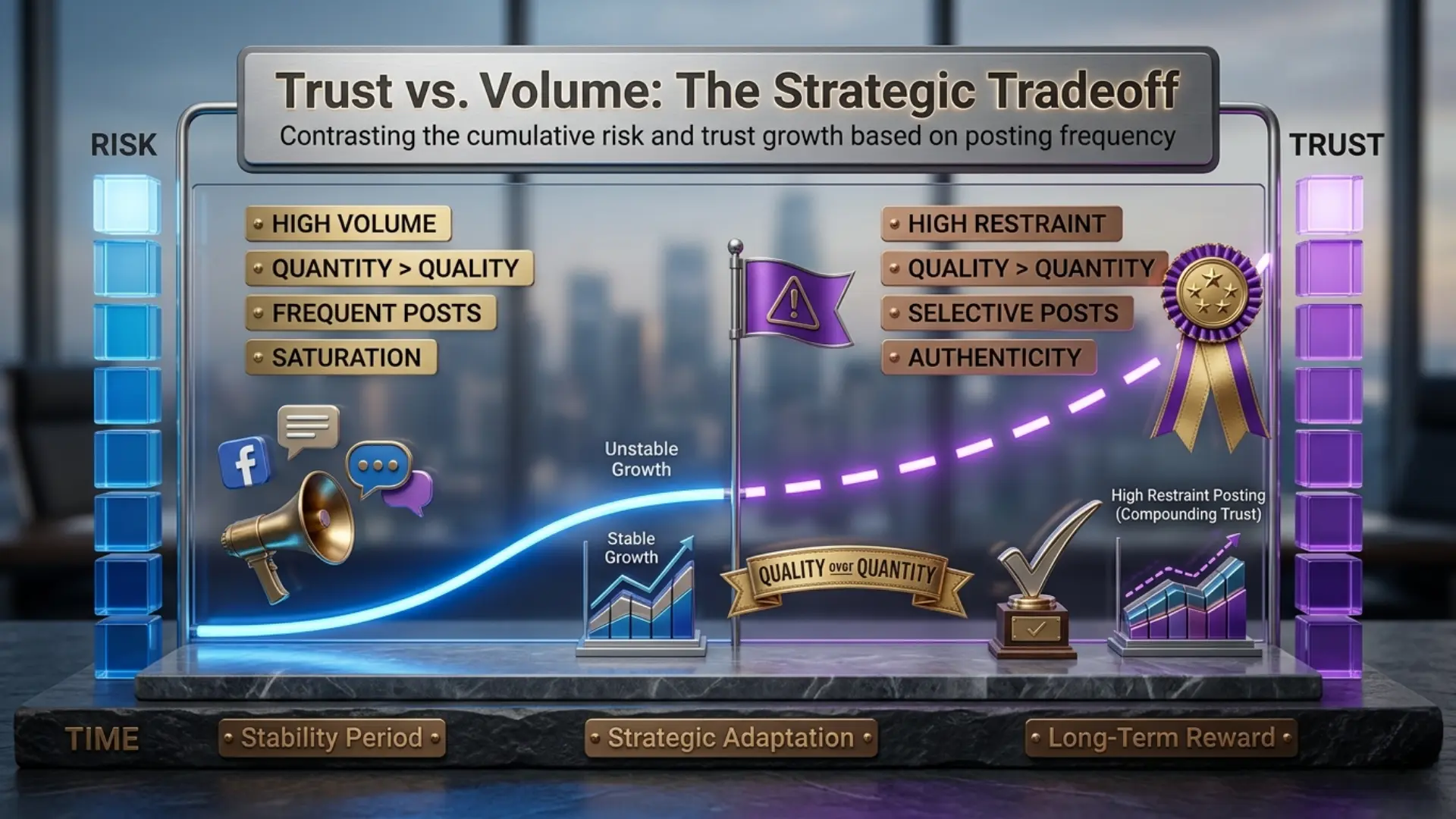
The practical move is simple but difficult: move the target from “more posts” to “fewer, higher-stakes signals”.
Teams that learn this flip don’t just reduce legal incidents – they start to be seen as trusted authorities by customers overwhelmed by noise.
That’s not an argument for silence, but for clarity: every message must earn its right to exist and survive both public and legal examination.
Therefore, maximizing visibility is not just about reach anymore – it’s about making every message count towards both compliance and trust.
The next challenge is even sharper: where does social end, and where must governance take over?
If your problem is that social media visibility creates risk in your market, start with the Social Media Marketing framework.

Where social media ends and governance, systems, or other capabilities must begin
Social media teams often believe their scope ends at content and posting.
But in regulated industries, the real boundary is not where the channel stops working – it’s where the risk outpaces the message.
Functional lines blur fast when a single misstep can trigger audits, client mistrust, or even sanctions.
Most organizations discover this boundary by accident.
Not by design, but by friction – an urgent legal review, a compliance escalation, or platform warnings that don’t appear until the harm is already visible.
Social can’t be treated as a simple megaphone.
It must connect to deeper systems that manage review, approvals, recordkeeping, and risk – otherwise, exposure grows, but trust erodes in the background.
The real question: where is the hard stop that separates social activity from enterprise responsibility?
Why approval governance belongs in the architecture, not an afterthought
Teams frequently bolt approval flows onto existing social processes, assuming occasional oversight is enough.
But manual reviews after drafts, or scrambling for sign-off, mimic taping a smoke alarm to a burning wall.
The warning comes too late to matter.
What happens when legal or compliance review slows or blocks a launch?
Often, the message never ships – or worse, it ships late and lands flat.
In our work, we’ve seen companies stall high-stakes campaigns while awaiting feedback from disconnected teams.
One healthcare client delayed a major awareness push by weeks, not for lack of creative talent, but due to missing a built-in workflow for approval.
The loss wasn’t just time; it compounded visibility gaps and invited internal blame games.
Myth: Speed is a sign of modern social execution.
Reality: For regulated industries, unchecked speed is friction disguised as progress.
The analogy here is like trying to run a relay race but the baton is locked in another building – efficiency claims evaporate at the first handoff.
Approval must be baked into the campaign – from ideation, through staging, to post-launch monitoring.
If governance is an afterthought, blind spots multiply and the cost lands where it hurts: on reputation and regulatory standing.
The system isn’t compliant until review is as natural as composing the post itself.
A repeatable insight: The more invisible your workflow, the bigger your audit risk.
So, do your processes slow the team – or do they absorb risk before it compounds?
Why overclaiming or urgency tactics escalate risk in sensitive markets
Last spring, a single social post promising ‘guaranteed savings’ triggered an unplanned investigation for a financial firm – no one on the team expected a simple offer to end in a compliance fire drill.
In regulated sectors, urgency tactics and bold claims are not just persuasive devices – they’re potential liabilities.
A single misjudged message can prompt takedowns, regulator scrutiny, or lasting harm to credibility.
This tension appears clearest when product or financial teams push for ambitious launches.
We once advised a fintech brand eager to run a limited-time promotion with bold growth promises.
Legal flagged the language as non-compliant, but the team was convinced urgency would drive engagement.
The post gained traction briefly before the platform flagged it and the regulator followed up.
Now, not only did the offer lose momentum, the brand spent weeks on remediation.
Risks of Overclaiming and Urgency Tactics in Regulated Social Media
- Urgency and bold claims can trigger regulator scrutiny and investigations.
- Non-compliant language can cause content takedowns and remediation delays.
- Short-term engagement lifts risk long-term reputational harm.
- Pressure from product teams often conflicts with compliance needs.
- Social media risk appetite must guide messaging strategies.
- Balancing urgency with compliance protects brand and legal standing.
The myth here is that urgency and volume always fuel results.
In sensitive markets, these tactics often invite the fastest path to platform removal or reputational decline.
So the question becomes: how often does your social calendar trade short-term lift for long-term harm?
The edge of social media isn’t where posts stop.
It’s where your risk appetite ends – and your controls, governance, and business systems either protect or expose what comes next.
Trust in regulated industries isn’t built on more activity; it’s secured by knowing when to hand the baton to stronger systems.
Which means the next problem to solve isn’t more posts – it’s deciding which adjacent system protects the value you create.

Common failure modes when trust and risk aren’t mapped in social systems
Most regulated-industry executives blame weak social results on team skill or platform choices.
But loss of momentum and trust often trace straight back to invisible system gaps – not people or tools.
The quiet reality?
The sharpest social media failures start with choices that look “safe” on a dashboard but silently erode trust and attention over time.
When nothing compounds because governance slows or silences activity
Content calendars can be full and teams eager to post, yet social channels stay eerily quiet.
The reason isn’t always a lack of resources or creative energy.
In regulated environments, the workflow turns brittle: every post must run the compliance gauntlet, approvals stall, and cycles stretch.
But here’s the failure pattern – each delay doesn’t just slow a post; it kills the channel’s compounding effect.
Social, by its nature, relies on sequence and momentum.
If posts stack up waiting for a green light, the brand voice scatters, and algorithms cool off.
One executive shared the pain: a campaign designed to build trust ended up with 70% of content stuck in review for so long that regulatory changes made the originals obsolete.
Time itself became the risk – messages missed both their window and their audience.
Notice what most dashboards miss: the opportunity cost isn’t just lost posts, but the loss of persistent visibility.
Compounding never takes off; instead, each compliance bottleneck resets whatever interest the last post managed to spark.
Momentum stalls when each review cycle restarts the process – turning continuity into a series of isolated sprints rather than a relay race.
How much visibility does that cost over a quarter?
The math rarely makes the report – but the algorithm doesn’t care about your review cycles.
When engagement doesn’t become demand because content feels generic or self‑defensive
It’s tempting to play safe: strip nuance, sand away specifics, and stick to neutral phrases that “can’t get us in trouble”.
But safety-first content often lands with a thud.
Executives scan well-crafted, compliant posts – then see no behavior shift in real prospects.
The post isn’t wrong, yet nothing moves.
Here’s the myth: the more cautious content becomes, the lower the reputational or legal risk.
But past a point, too much caution simply invites indifference.
Buyers in regulated categories already know the stakes – they need evidence of confidence, not risk-avoidant hedging.
If every message sounds like it crawled through legal review (and most did), interest drops further.
A pattern we’ve watched play out: high engagement numbers (likes, occasional comments) but zero measurable lift in pipeline.
Teams mistake activity for trust, never realizing they’re training the market to tune them out.
One sharp analogy: publishing generic social is like speaking through a heavy pane of glass.
Your voice emerges, but no one feels compelled to step closer.
So what’s the fix?
Sharpening content for compliance is necessary – but if risk management becomes the dominant voice, trust and demand decay together.
The biggest damage isn’t a single weak post, but the slow training of prospects to ignore you.
What most teams miss is not just the surface result, but the strategic signal: If engagement never compounds into pipeline, the underlying system treats all trust signals as threats.
That is the silent early warning – pointing straight to a deeper design flaw that can’t be solved with more content, or a replacement platform.
The next question: can you spot the signals early enough to intervene before the brand becomes invisible?

How to assess whether social media is failing to build trust or simply breaking compliance
Most executives believe lagging social media results mean the strategy – or the team – isn’t working hard enough.
Yet pressing for more posts, more volume, or more flashy engagement rarely moves the needle in regulated industries.
The real friction hides in how boundaries get set – and what they quietly allow to slip through.
Signals that social media needs better boundary definition, not more posts
It’s tempting to attack weak numbers with more activity.
But when the system is misaligned, extra posts act like turning up the volume on static: the message gets sharper, but the trust signal gets lost even faster.
The myth is that better tactics will rescue performance, when the invisible barriers – compliance requirements, ambiguous approval lines, shifting content boundaries – actually govern results.
We’ve seen this play out with B2B financial clients.
After a quarter of declining reach, the instinct was to triple posting frequency and loosen content reviews.
The campaign numbers spiked – then dropped after regulatory review flagged a technical violation.
That spike and crash pattern is the smoke: the real fire is a boundary problem, not a content shortage.
How do you know when you’re dealing with a boundary issue instead of a messaging one?
Look for signals like posts getting stuck in limbo, inconsistent feedback on what’s “allowed”, or an audit trail that’s more improv than process.
When nobody’s confident where social ends and risk begins, the team either freezes or floods – both eroding trust.
Ironically, when the boundaries are clear, volume matters less.
A social system with sharp division between what’s postable and what’s not gives every interaction more weight, not less.
That’s where the compounding starts.
Without those lines, the cycle becomes reactive, defensive, and impossible to scale.
More content without clarity is just more exposure, not more trust.
The focus has to shift from adding posts to sharpening boundaries.
When adding governance improves outcomes more than changing platforms
Platform switching is the go-to fix for teams frustrated by sinking engagement or process snags.
It’s easy to blame the wrong dashboard for dull results or stale compliance logs.
But the tougher – and far more effective – move is installing governance that actually fits how regulated social media works.
The system, not the surface, shapes the outcome.
We watch organizations hop from one major scheduling tool to another.
The problem persists: posts vanish into approval lags, or worse, skirt review entirely when the pressure’s on.
The channel changes, the process dysfunction just moves with it.
It’s like swapping the tires when the real failure is in the steering.
A real fix starts with governance embedded where teams actually work: clear rules for what must be reviewed, defined escalation paths, dynamic approvals that mirror real response times.
When governance moves from a post-hoc check to a living part of the workflow, trust signals sharpen and regulatory risks shrink.
The surprising part?
Conversion often climbs, not drops – as buyers detect consistency and reduced noise.
So when results fall short, the best question isn’t “which tool next”, but “what piece of governance is missing?” That’s the shift that turns a compliance burden into decision power.
The biggest misconception is that platform choice outranks system setup.
But lasting trust-builders in regulated social media are rarely platform-dependent – they’re boundary-dependent.
The harder question emerges: what governance upgrade would unlock your channel far faster than a new platform ever could?
Here is how these trust and risk constraints shape social media in a real regulated market.

Scientific context and sources
The sources below provide foundational context for how decision-making, attention, and performance dynamics evolve under scaling and constraint conditions.
- Regulation of Social Media and Organizational Risk
Guidance on Social Networking Websites and Business Communications – FINRA Regulatory Notice 17-18
Provides direct regulatory guidance on how financial firms should govern digital communications, including social media, supervision, recordkeeping, third-party content, and the compliance risks created by modern communication channels.
https://www.finra.org/rules-guidance/notices/17-18 - Trust, Compliance, and High-Stakes Communication Systems
Trust, Control, and Risk in Strategic Alliances: An Integrated Framework – T. K. Das, Bing-Sheng Teng – Organization Studies
Explains how trust, control, and risk are linked inside organizational systems. This supports the article’s argument that regulated social media trust is not created by activity alone, but by visible controls, oversight, and clear risk boundaries.
https://journals.sagepub.com/doi/10.1177/0170840601222004 - Documentation, Audit Trails, and Legal Requirements
Observations from Investment Adviser Examinations Relating to Electronic Messaging – U.S. Securities and Exchange Commission
Directly supports the article’s point that regulated communications need policies, procedures, retention systems, and audit-ready records. It is especially relevant to social media and electronic messaging in financial services.
https://www.sec.gov/files/OCIE%20Risk%20Alert%20-%20Electronic%20Messaging.pdf - Effects of Volume vs. Restraint in Regulated Communication
Blinded by the Light: Information Overload and Its Consequences for Securities Regulation – Troy A. Paredes – Washington University Law Review
Shows why “more information” can become counterproductive in regulated financial contexts. This supports the article’s argument that regulated brands often build more trust through clarity, restraint, and fewer higher-quality messages instead of constant output.
https://openscholarship.wustl.edu/law_lawreview/vol81/iss2/7/
Questions You Might Ponder
Why is social media regulation stricter in industries like finance or healthcare?
Social media in regulated industries faces stricter oversight because posts are considered permanent records that must comply with laws governing disclosure, accuracy, and recordkeeping. Missteps can result in serious legal, financial, and reputational penalties, demanding higher standards of control and traceability in all communications.
How does compliance review impact social media strategy in regulated industries?
Compliance review slows down content creation, reduces spontaneous posts, and requires multi-layer approval workflows. The strategy shifts from frequent, trend-driven messaging to deliberate, audit-ready communications that prioritize accuracy, restraint, and traceability over viral reach and volume.
What is the risk of using urgency tactics or bold claims in regulated social media?
Using urgency tactics or bold claims can trigger regulatory investigations, content takedowns, and public distrust in regulated sectors. Non-compliant language increases legal exposure, and short-term engagement lifts are outweighed by long-term reputational and regulatory risks, making caution essential.
Why does posting more content not always build brand trust in regulated environments?
Excessive posting increases legal risks and dilutes brand credibility by multiplying opportunities for compliance errors. In regulated industries, trust compounds through consistent, high-quality, compliant messaging rather than high frequency, making focused restraint more valuable than volume.
When should governed systems take over from social media teams in regulated industries?
Governed systems must take over when the risk outpaces the message – such as during legal reviews, recordkeeping, or compliance escalations – ensuring that every post meets regulatory standards, is properly documented, and that business systems are in place to absorb risk effectively.